Home · Guides
Slope
For a sloping lawn, measure the gradient, distinguish the interior from the boundary and check the exact model’s conditions. A maximum percentage does not guarantee traction in every situation.
Understanding a 30% gradient
Percentage and degrees are different
Percentage gradient is vertical rise divided by horizontal distance, multiplied by 100. A 30 cm rise over 100 cm horizontally is 30%, or about 16.7°. Do not substitute the distance along the sloping ground for horizontal distance. A 45% gradient is roughly 24.2°, while 45° equals 100%.
Measure several accessible sections instead of averaging the whole garden: a short ramp may be the limiting factor. An inclinometer may display degrees, so check its unit. Record the values and steepest point on your plan.
Read a limit in context
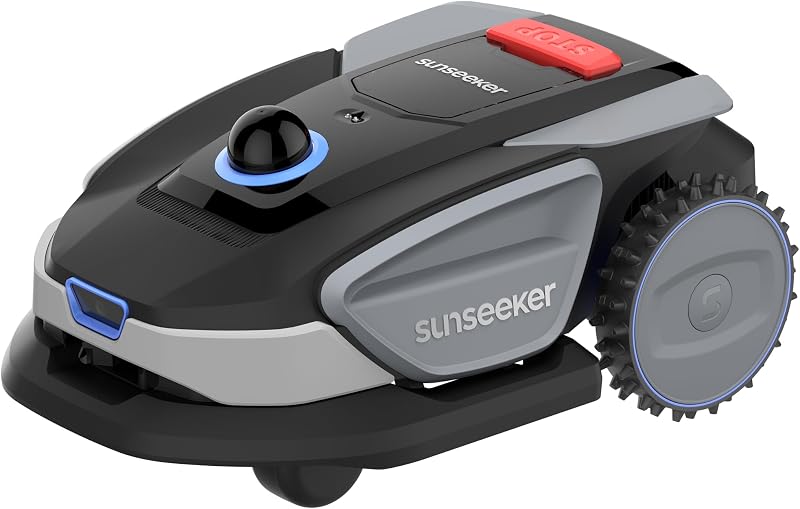
WORX lists 35% for WR167E. The European Sunseeker S4 manual specifies 42%, and MOVA lists 45% for the rear-wheel-drive LiDAX Ultra range. These are manufacturer declarations, not results from one comparative test. The highest number does not automatically identify the best mower for your garden.
Keep the exact reference and manual page for each candidate. Check whether the limit concerns the whole work area and whether restrictions apply near boundaries. Do not transfer AWD capabilities to similarly named rear-wheel-drive versions.
Check boundaries, turns and station access
The mower must climb, descend, turn and return to its station. A permissible gradient in the middle of the lawn can lead to an edge requiring different arrangements. Identify what lies below: a path, wall, bed, drop or exclusion area. Clearances and protection come from the manual, not an invented allowance.
Inspect transitions between slope and level ground. Roots, bumps and hollows differ from a constant gradient. A stated obstacle-climbing height of a few centimetres does not mean the mower can descend steps or handle every ground shape.
Compare traction without blanket promises
The number of driven wheels matters, but does not replace checking terrain and operating conditions. Avoid “AWD never slips” and “AWD always consumes more”. Consumption and traction need evidence for the actual products under stated conditions.
Read reviews of the exact variant for reports of wheelspin and manual interventions. One reported stoppage is a point to investigate, not a failure rate. Compare its context with yours: lawn hollows, wheel condition, local gradients and time of year.
Observe difficult areas in October
Use the last outings to note areas requiring more intervention. A new difficulty calls for checking ground, mower condition and instructions before retaining the same schedule. Never raise a stated limit to make a product fit your garden.
Your decision sheet should include maximum measured slope, its unit, boundary constraints, station access and each model’s limits. If something is incompatible, change the installation or exclude that candidate. A guide and comparator organise these checks; they do not replace a site assessment where access poses a risk.
Sources and manufacturer documentation
| Photo | Model | Navigation | Price | Amazon |
|---|---|---|---|---|
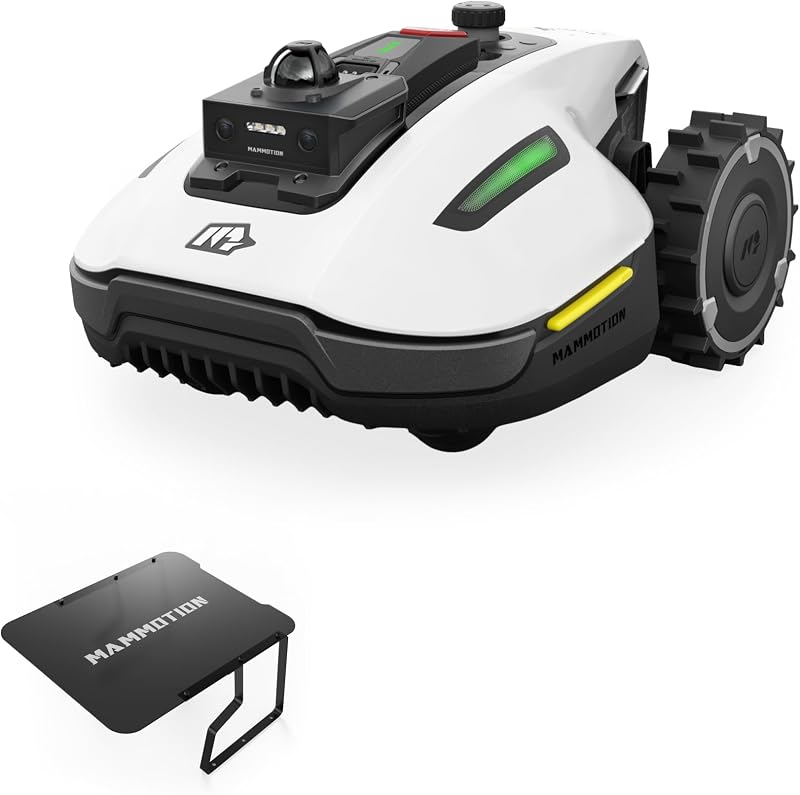 | MAMMOTION YUKA Mini 2 800 LiDAR | 360 LiDAR + Vision AI | 899 € | Search on Amazon.com |
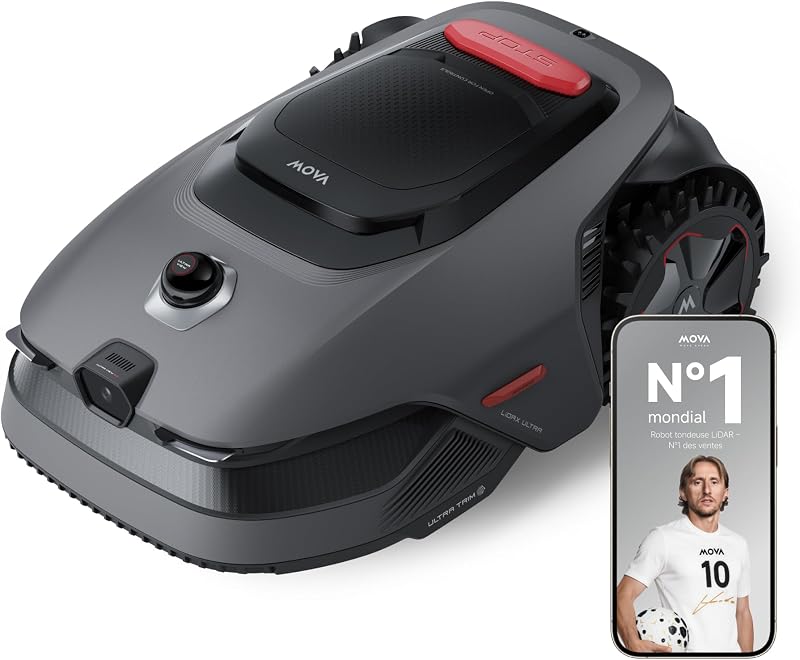 | MOVA LiDAX Ultra 800 | lidar + vision | 679,99 € | Search on Amazon.com |
 | MOVA ViAX 500 | LiDAR + vision | 549 € | Search on Amazon.com |
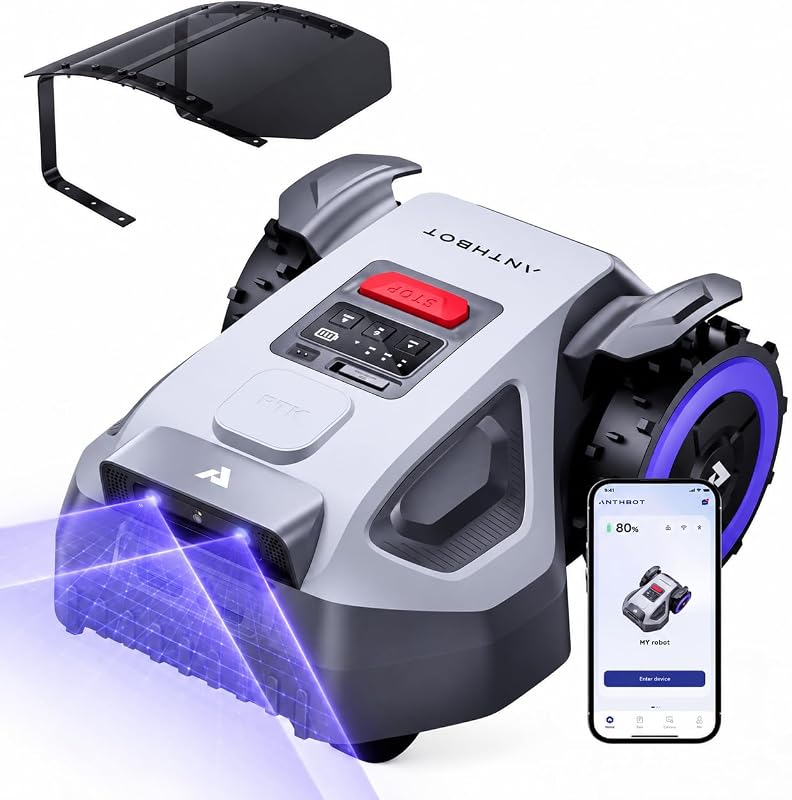 | ANTHBOT M5 | LiDAR + RTK + vision | 629 € | Search on Amazon.com |
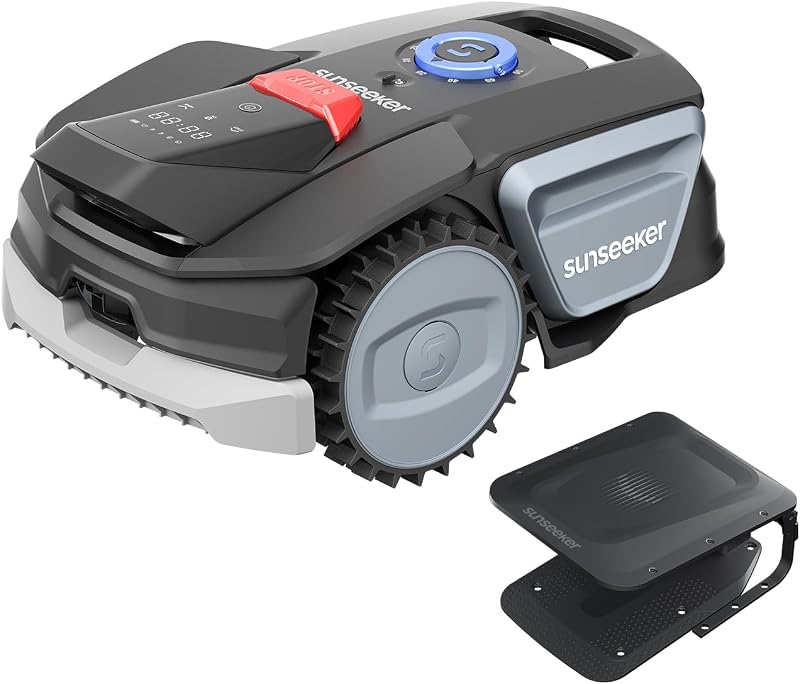 | SUNSEEKER V1 | vision + wireless | 379 € | Search on Amazon.com |
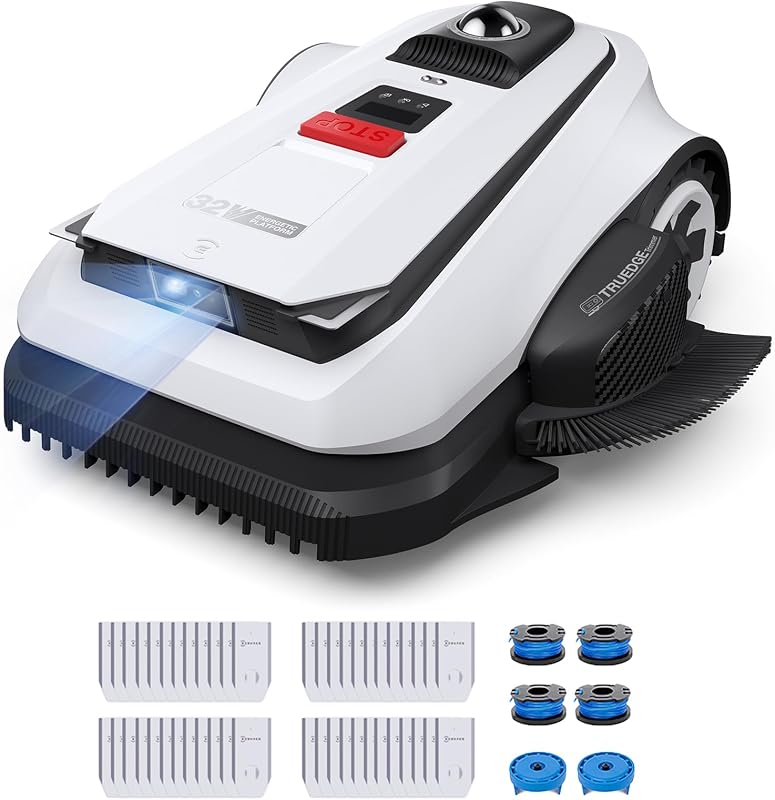 | ECOVACS GOAT A1600 LiDAR Pro Care | LiDAR + vision + wireless | 949 € | Search on Amazon.com |
Open the interactive comparator
FAQ
Does 45% mean 45°?
No: 45% is about 24.2°. A 45° slope is 100%.
Does AWD establish suitability?
No. Check model limits, boundaries, ground shape and station access.
Amazon affiliate links. We may earn a commission at no extra cost to you. We do not invent specs.