Home · Comparisons
Wired or wireless?
A wired robot follows a boundary cable. Wireless means RTK or LiDAR. Installation requirements depend on the exact model. The lawn decides, not the box year.
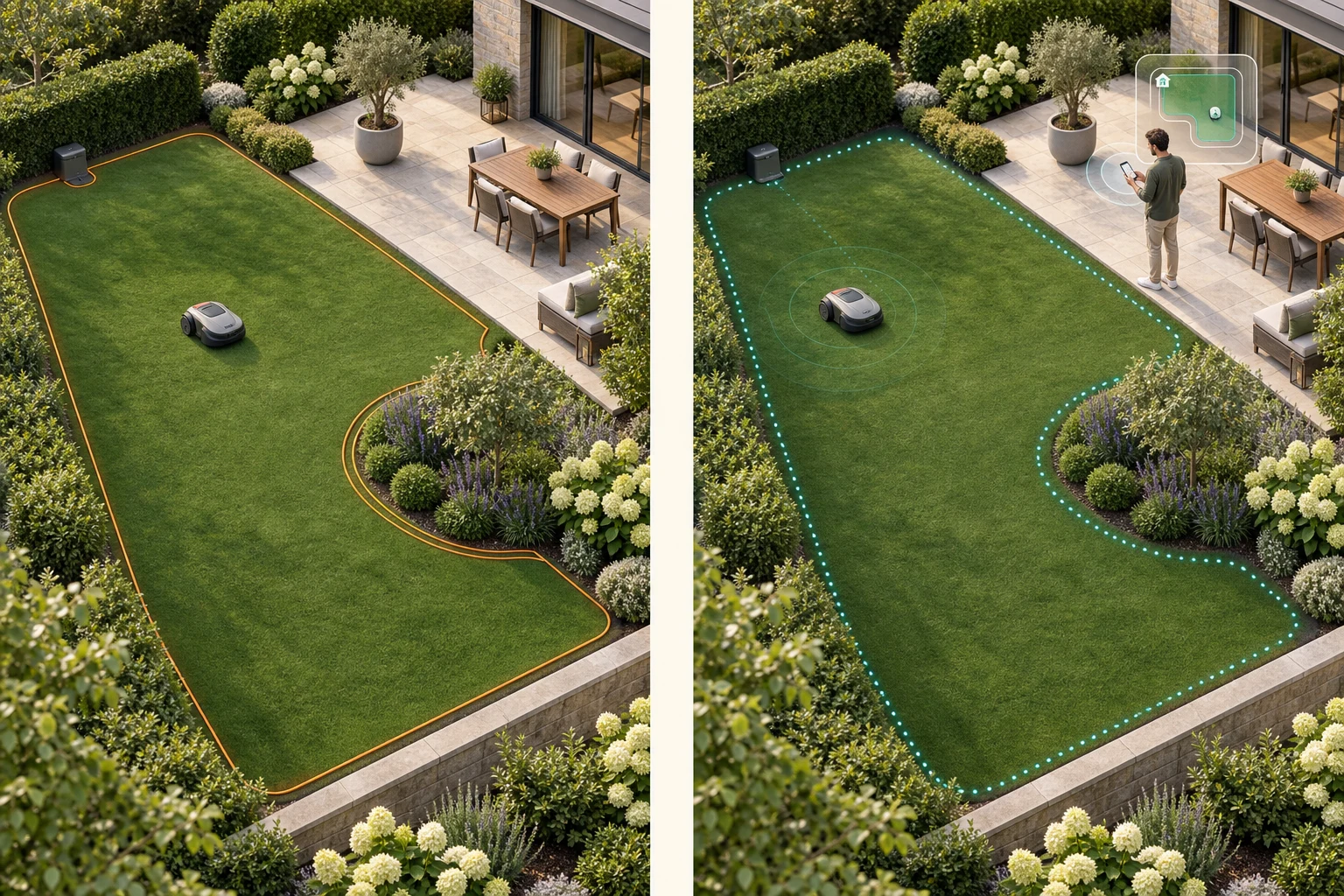
A wired robot follows a cable. A wireless one positions itself, by RTK or LiDAR. That is not the same install and not the same entry price. Check lawn area, passages and installation requirements before choosing.
Boundary wire
The cable outlines the lawn. Laying takes longer, then it is stable, including under trees. Tracked examples: Landroid, Automower.
Wireless
Two families, not one: LiDAR or RTK. Navimow on the RTK side, Mova LiDAX on the LiDAR side.
What really decides
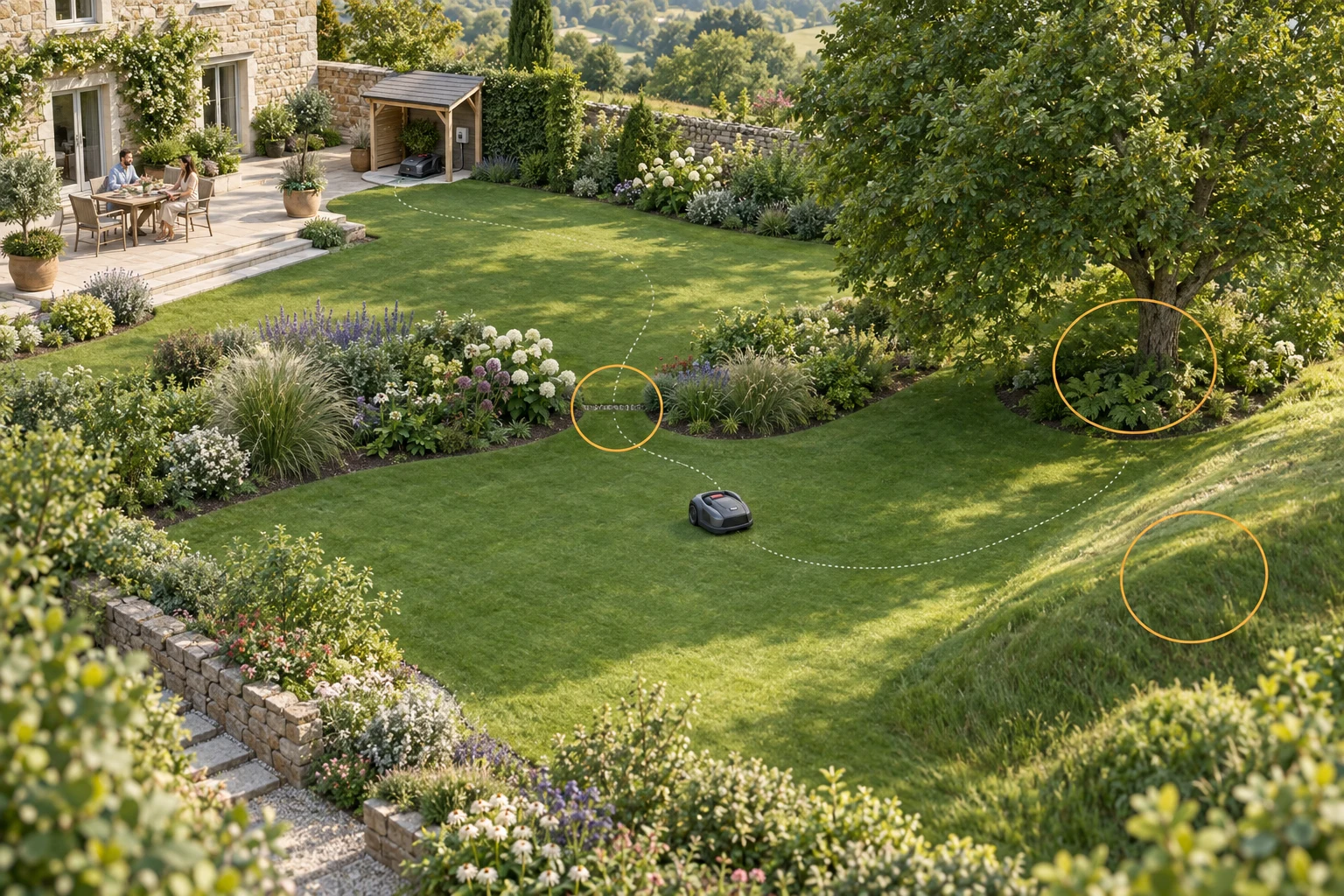
Three questions are enough. Are there islands to drive around? Is the plot wooded? Will you spend half a day laying a cable? If the garden is simple and laying is acceptable, wire stays the best result for the price. If the plot is split or wooded, wireless becomes rational despite the premium.
What wireless does not solve
Wireless is not install-free. RTK needs a well-placed antenna, LiDAR needs visible features. Narrow passages, multiple zones and steep slopes remain in both cases.
FAQ
Is wireless always better?
No. It costs more and needs an antenna or LiDAR. A simple rectangle: wire is enough.
Is wire dead?
No. A wired model can suit your lawn if its capacity and installation requirements fit.
Wireless means no install?
No. RTK needs an antenna, LiDAR needs mapping. Narrow passages and slopes remain.
Mix them?
No. One system per machine.
Prices?
On Amazon once the ASIN is verified.
Amazon affiliate links. We may earn a commission at no extra cost to you. We do not invent specs.